
Tax Preparation vs. Tax Planning. What's the difference?
Have you ever looked at your tax return and thought:
“Okay…so what am I supposed to do with this information?”
If so, you're not alone.
Your tax return contains a lot of useful information. It tells you how much income you had, what deductions you claimed, what your taxable income looked like, and how much you ultimately owed or paid.
But there's one problem:
By the time you're looking at your tax return, the year is already over.
That's where tax planning comes in.
Tax preparation and tax planning are related, but they serve two very different purposes.
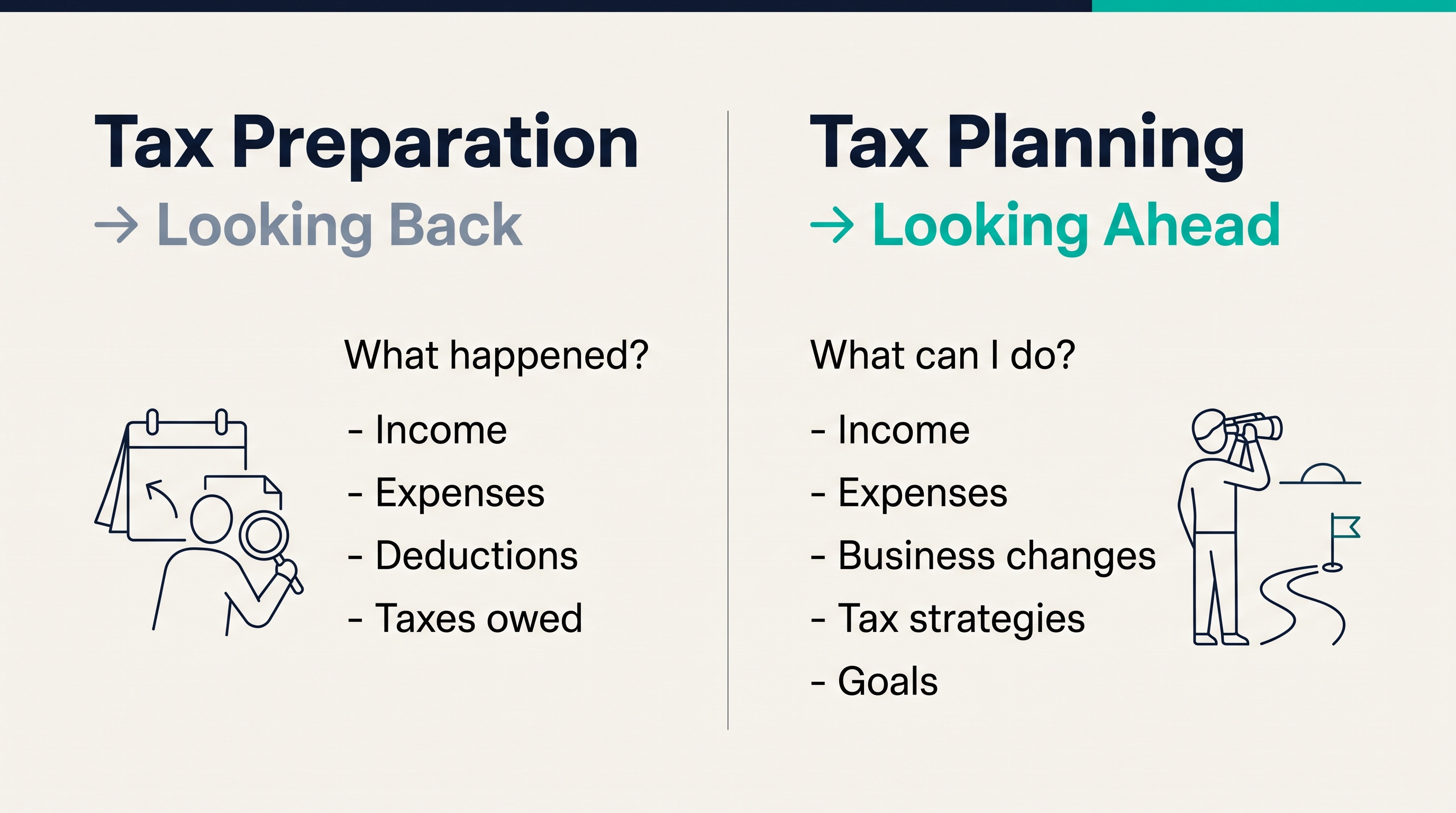
Tax preparation tells you what happened. Tax planning helps you decide what to do next.
And for small-business owners, that difference can be significant.
Tax Preparation Looks Back
Tax preparation is primarily about reporting what has already happened.
Once the tax year ends, your tax professional gathers your financial information, reviews your records, applies the applicable tax rules, and prepares your return.
That process helps answer questions like:
How much income did I have?
What expenses and deductions can I claim?
What is my taxable income?
How much tax do I owe?
How much have I already paid?
Do I have a balance due or a refund?
All of that information is important.
But it is also largely backward-looking.
Once December 31 has passed, many of the decisions that could have affected that year's tax situation are no longer available.
That's why simply preparing your tax return isn't the same thing as planning for your taxes.
Tax Planning Looks Ahead
Tax planning happens before the tax year is over, while you still have time to make decisions.
Instead of asking only:
“What happened?”
You're asking:
“What can I do now that could improve my tax situation?”
That might mean looking at:
Expected business income
Anticipated expenses
Estimated tax payments
Business structure
Equipment purchases
Retirement contributions
Owner compensation
Changes in the business
Potential deductions or credits
Personal financial goals
Plans for the next several years
The key is that you're making decisions before the opportunity has passed.
Tax Planning Isn't Just About Finding More Deductions
This is one of the biggest misconceptions I hear about tax planning.
Tax planning isn't simply a search for more deductions.
It's not automatically:
Buying something before December 31 because someone said it's deductible
Becoming an S-Corporation because you reached a certain revenue number
Finding a list of “10 deductions you're probably missing”
Putting money into a retirement account simply because it may reduce taxable income
Those things can be part of a tax strategy.
But they're not strategies by themselves.
The better question is:
“Does this actually make sense for my business and my situation?”
Because reducing your taxes isn't always the same thing as making the best financial decision.
Here's an Example
Let's say a business owner has heard that once a business reaches a certain level of revenue, it should become an S-Corporation.
So they reach that revenue number and think:
“I guess it's time to become an S-Corp.”
But revenue alone doesn't tell the whole story.
A thoughtful tax planning conversation would look at the owner's actual financial situation and compare the potential tax consequences and costs of the different structures.
And sometimes the answer isn't:
“Yes, you should make the change.”
It might be:
“Not yet.”
For example, perhaps the business would benefit from making the change eventually, but the owner's current profit level doesn't make the additional administrative requirements and costs worthwhile.
Maybe another $20,000 in profit or some other change in the business could make the analysis look different.
In that situation, the tax strategy isn't necessarily doing something immediately.
It's knowing what to watch for and when the decision may make sense.
That's an important distinction.
Sometimes the Best Tax Strategy Is “Not Yet”
We're often conditioned to think that good financial advice should result in an action.
Buy this.
Change that.
Open this account.
Make this election.
Take this deduction.
But sometimes the best advice is:
Wait.
That doesn't mean nothing is happening.
It means you're making a decision based on your actual numbers rather than reacting to a generic rule.
A good tax plan might tell you:
“Yes, let's do this.”
The numbers support the strategy, and taking action now makes sense.
“Not yet.”
The strategy may make sense eventually, but your current situation doesn't justify making the change today.
“Here's what needs to happen first.”
You may need to increase profitability, change your business circumstances, gather additional information, or reach another milestone before the strategy becomes beneficial.
That's much more useful than making a tax decision simply because you saw someone recommend it on Instagram.

Your Business Isn't Someone Else's Business
This is especially important for small-business owners.
It's easy to compare your business to someone else's.
Maybe another business owner:
Became an S-Corp
Bought a vehicle
Started a retirement plan
Purchased equipment
Changed their business structure
Started making quarterly estimated payments
And because you have similar businesses or similar revenue you assume you should do the same thing.
But two businesses can have the same revenue and completely different tax situations.
Their profitability may be different.
Their expenses may be different.
Their personal financial situations may be different.
Their growth plans may be different.
And their long-term goals may be completely different.
Tax planning should take those differences into account.
So What Does Tax Planning Actually Look Like?
At C-Squared Accounting, tax planning starts with your actual situation, not a generic checklist of tax strategies.
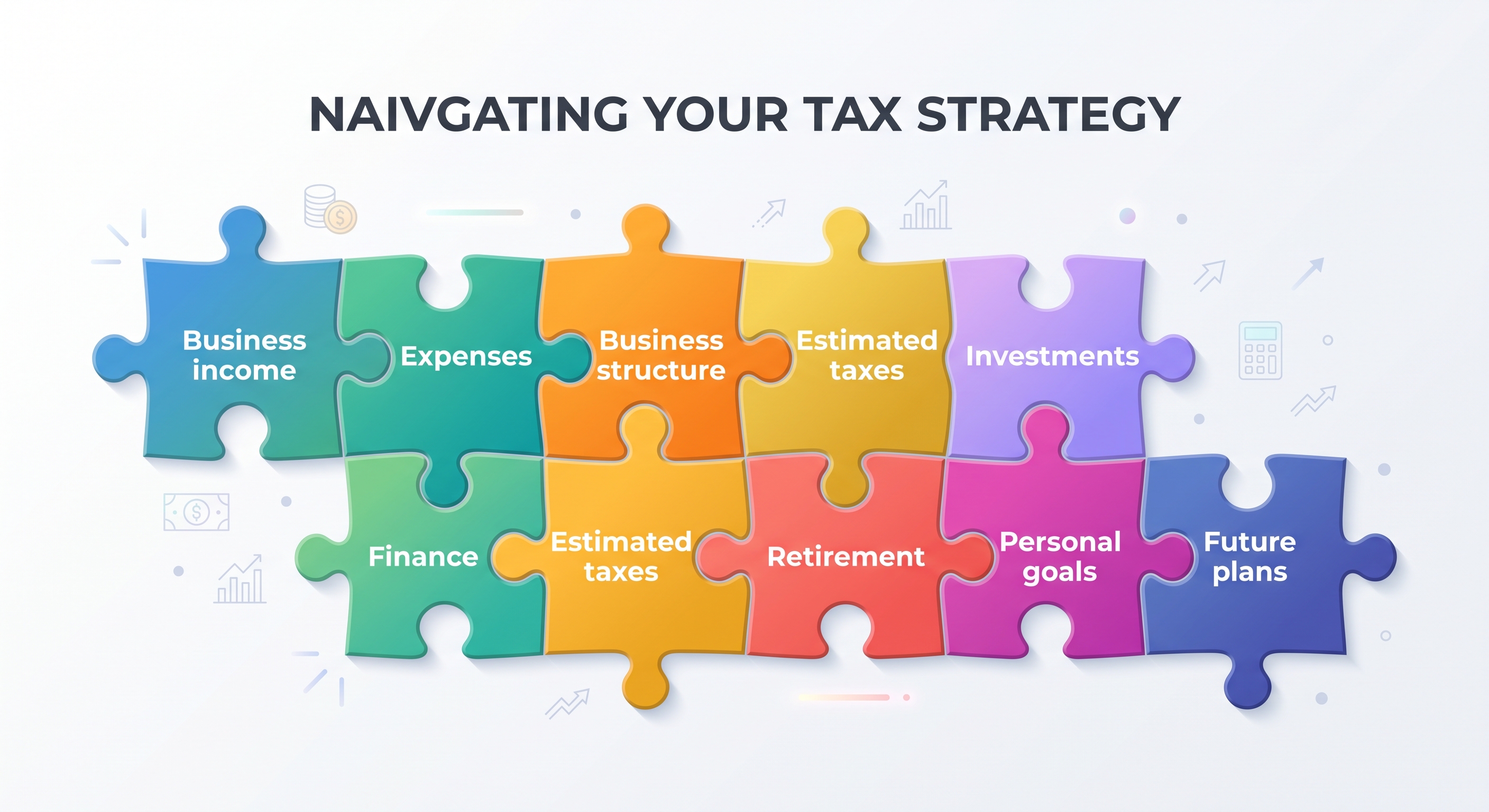
We may look at things like:
1. Your Current Financial Picture
What does your business actually look like financially right now?
Revenue is important, but so are expenses, profitability, cash flow, and other financial information.
2. Your Previous Tax Returns
Your past returns can provide important context.
They can help identify patterns, understand how your business has changed, and establish a starting point for planning.
3. Your Expected Income and Expenses
What do you expect the rest of the year to look like?
A plan based on last year's numbers may not make sense if your business has grown significantly or if your circumstances have changed.
4. Your Estimated Tax Payments
Are your current payments reasonably aligned with what you expect to owe?
You don't want to be caught off guard by a large tax bill, but you also don't necessarily want to send the government more money than necessary throughout the year.
5. Changes in Your Business
Are you hiring?
Buying equipment?
Adding a new service?
Changing your business structure?
Increasing or decreasing your income?
Business changes can create new tax planning opportunities—or new considerations.
6. Your Personal and Business Goals
Tax planning shouldn't happen in a vacuum.
Your financial goals matter, too.
Maybe you're planning to hire your first employee. Maybe you want to purchase property. Maybe you're preparing for retirement. Maybe you're trying to increase your take-home income.
The right tax strategy should support the bigger picture.
7. Where You Want to Be in 3–5 Years
This is one of the biggest differences between reactive tax preparation and proactive tax planning.
Instead of only asking what saves you the most tax this year, you can start thinking about what decisions make sense for the business you're building.
What Should You Do With Your Tax Return?
Your tax return shouldn't just be something you file away until next tax season.
It can be a useful starting point for better decisions.
After your return is prepared, consider asking:
What do these numbers tell me about my business?
Did anything change significantly from the prior year?
Was my tax bill higher or lower than expected?
Are my estimated payments on track?
Are there business decisions I should be thinking about before year-end?
Is my current business structure still appropriate?
Are there upcoming purchases or investments I should plan for?
What should I be doing differently over the next 6–12 months?
Those questions move you from reporting what happened to planning what comes next.
And that's where your tax return becomes more than a compliance document.
It becomes a source of information you can use to make better business decisions.
Tax Planning Gives You Time
This may be the most important part of tax planning.
Time creates options.
When you wait until tax season to think about taxes, some opportunities may already be gone.
When you plan earlier, you have more time to:
Evaluate your options
Compare different strategies
Make informed purchases
Adjust estimated payments
Consider business structure changes
Prepare for major financial decisions
Gather documentation
Make changes while they can still have an impact
You don't need to make every decision immediately.
But you do want to know which decisions are worth considering while you still have time to make them.
The Bottom Line
Tax preparation and tax planning aren't the same thing.
Tax preparation tells you what happened.
Tax planning helps you decide what to do next.
And good tax planning isn't about finding every possible deduction or following a list of strategies you saw online.
It's about understanding your numbers, considering your goals, evaluating your options, and deciding what actually makes sense for your business.
Sometimes the answer will be yes.
Sometimes it will be no.
And sometimes it will be:
“Not yet but here's what we should watch for.”
That's the value of proactive tax planning.
Wondering What Your Next Tax Decision Should Be?
If you've been wondering whether you're making the right tax decisions for your pet care business, I'd love to hear what's on your mind.
Maybe you're wondering about your business structure, equipment purchases, estimated taxes, retirement, deductions or something completely different.
You don't have to figure it all out from a tax tip you saw on Instagram.
Start with your actual numbers and your actual goals.
Looking for additional support, visit c-squaredaccounting.com to contact us.