
5 Signs Your Business Books Need a Cleanup
Your bookkeeping may not be something you think about every day but when your books are messy, the consequences can show up in some very important places.
You may be making decisions based on inaccurate numbers, missing legitimate deductions, struggling to understand your cash flow, or scrambling when tax time arrives.
The good news? Messy books can be fixed.
Whether your business has been operating for a few months or several years, there are some clear warning signs that your financial records need attention.
Here are five signs it's time to give your business books a cleanup and what you can do about them.
1. Your Bank Accounts Don't Match Your Books
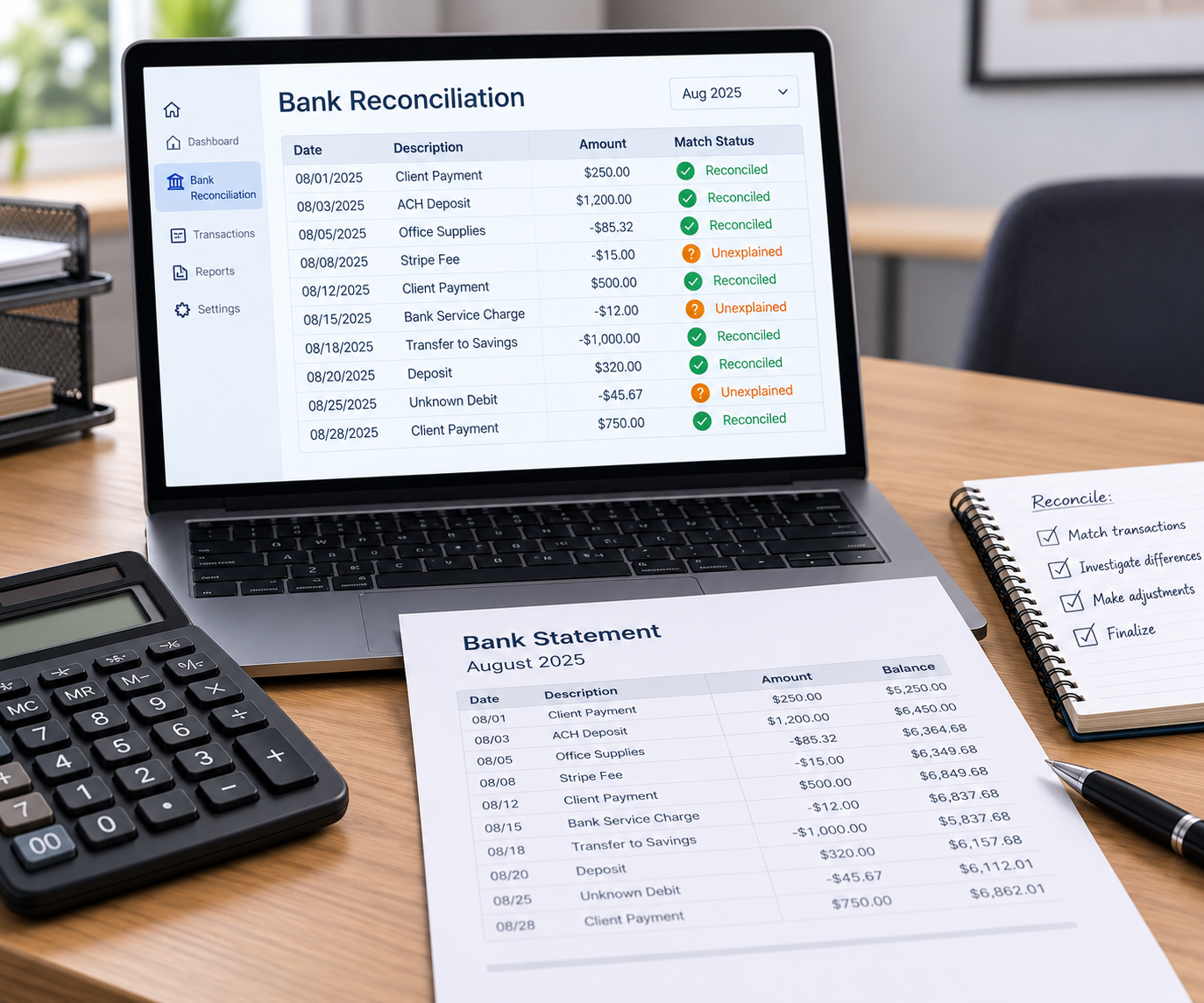
One of the biggest red flags is when the balance in your accounting software doesn't match what you see in your actual bank or credit card accounts.
A difference doesn't necessarily mean something is seriously wrong. There could be outstanding transactions, timing differences, duplicate entries, or transactions that were categorized incorrectly.
But if you're consistently avoiding reconciliation because you don't know where the difference came from, that's a problem.
Why this matters
Bank and credit card reconciliations help verify that the transactions recorded in your accounting system actually match what happened in your business.
Without regular reconciliations, you could have:
Duplicate transactions
Missing income or expenses
Incorrect account balances
Transactions recorded in the wrong period
Personal expenses mixed with business transactions
The fix: Start by reconciling each bank and credit card account to the actual statement balance. If there are old unreconciled transactions or large unexplained differences, don't simply force the account to balance. Investigate the underlying issue.
2. You Have a Long List of Uncategorized Transactions
If you open your bookkeeping software and see dozens, or hundreds, of transactions sitting in "Uncategorized" or a similar holding account, your books probably need some attention.
This often happens when bank feeds are connected but transactions aren't reviewed regularly.
A bank feed can make bookkeeping easier, but it doesn't replace bookkeeping judgment.
For example, a $500 transaction might be:
Advertising
Office supplies
A software subscription
Equipment
A personal expense
A payment toward a loan
The accounting software may not know the difference. You have to tell it.
Why this matters
Your profit and loss statement is only as useful as the information going into it.
If expenses aren't categorized correctly, you may not have an accurate picture of:
Your true business expenses
Your most profitable revenue streams
Your operating costs
Your taxable income
Where your business is spending money
The fix: Review uncategorized transactions and assign them to the appropriate accounts. For unusual, large, or potentially tax-sensitive transactions, consult your bookkeeper or CPA rather than guessing.
3. Your Profit & Loss Statement Doesn't Make Sense
Have you ever looked at your P&L and thought, "That can't be right."
Maybe your revenue seems too high. Your expenses seem unusually low. One category suddenly jumped by thousands of dollars. Or your business appears significantly more profitable (or less profitable) than you expected.
Don't ignore that feeling.
Your financial reports should tell a story that makes sense based on what's happening in your business.
For example, if you know you spent $20,000 on marketing this year but your P&L only shows $8,000 in marketing expenses, something needs to be investigated.
Common causes of inaccurate financial reports include:
Transactions categorized incorrectly
Expenses recorded as assets or vice versa
Duplicate transactions
Missing transactions
Personal expenses recorded as business expenses
Owner contributions or distributions classified incorrectly
Loan payments recorded entirely as expenses
The fix: Review your P&L regularly and compare it with what you know is happening in your business. If something looks unusual, investigate it before using the report to make important decisions.
4. Your Balance Sheet Has Old or Suspicious Balances
Many business owners focus almost entirely on their Profit & Loss statement.
But your Balance Sheet can reveal some of the biggest bookkeeping problems.
Look for accounts with balances that have been sitting there for months or even years.
Examples might include:
Accounts receivable that should have been collected or written off
Old accounts payable
Undeposited funds
Loans that don't reflect the current balance
Fixed assets that were never properly recorded
Credit card balances that don't match statements
Suspense or clearing accounts with unexplained balances
These accounts don't necessarily mean your books are wrong. But they deserve investigation.
Why this matters
An inaccurate Balance Sheet can affect your understanding of your business's:
Cash position
Debt
Assets
Liabilities
Owner's equity
And if you're using your financial statements to make decisions, or handing them to your tax professional, those balances need to be reliable.
The fix: Review your Balance Sheet at least periodically and investigate accounts with unusual or aging balances. Don't simply make a journal entry to "make it go away" without understanding what caused the balance.
5. You Dread Tax Time Every Year
If tax season feels like an annual emergency, your bookkeeping may be part of the problem.
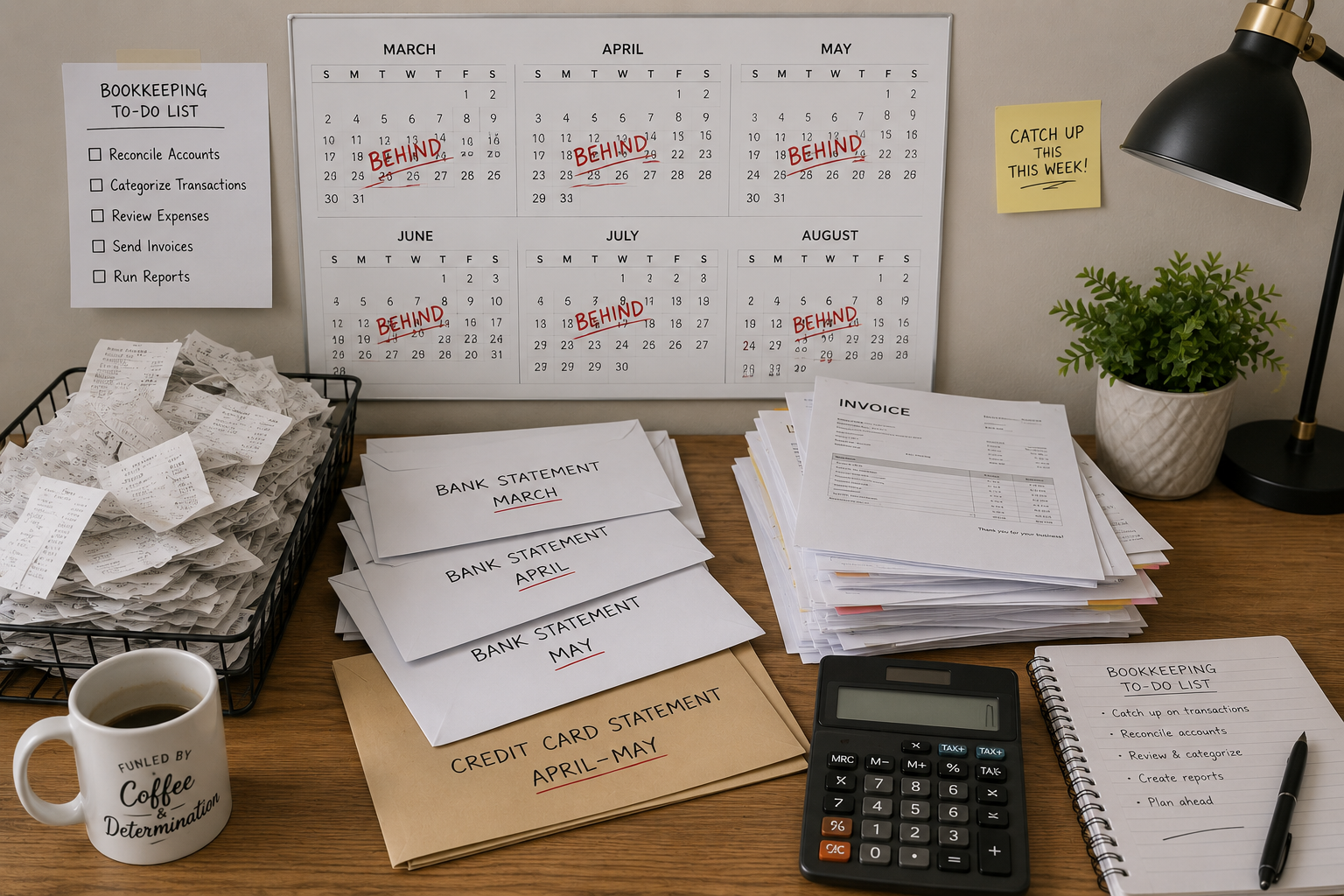
Maybe you're searching through emails for receipts, trying to figure out which expenses were business-related, downloading months of bank statements, or discovering that your books haven't been updated since March.
Tax preparation shouldn't require reconstructing your entire financial history from scratch.
Your bookkeeping should give you an organized financial foundation before you get to tax preparation.
A bookkeeping cleanup can help you:
Identify missing income and expenses
Correct transaction classifications
Reconcile bank and credit card accounts
Clean up balance sheet accounts
Organize documentation
Give your tax preparer more accurate information
Make tax planning conversations more productive
And there's another important benefit: clean books allow you to make better decisions throughout the year not just at tax time.
What Should You Do If Your Books Need a Cleanup?
First, don't panic.
Bookkeeping issues are common, especially as businesses grow. The important thing is to address them rather than allowing the problems to compound.
Start with these steps:
Step 1: Identify the problem areas
Review your:
Bank and credit card reconciliations
Uncategorized transactions
Profit & Loss statement
Balance Sheet
Accounts receivable
Accounts payable
Loan balances
Owner's equity accounts
Look for anything that doesn't make sense or hasn't been reviewed recently.
Step 2: Determine how far back the problems go
Don't assume you only need to fix the current month.
A bookkeeping issue that started two years ago can continue affecting your current financial statements.
Determine when the problem began before making corrections.
Step 3: Separate bookkeeping cleanup from ongoing bookkeeping
There's an important distinction between cleaning up old books and keeping your books current going forward.
A cleanup may involve researching historical transactions, correcting account classifications, reconciling old statements, and making necessary adjustments.
Once that's complete, establish a process for maintaining accurate books each month.
Step 4: Know when to bring in professional help
Some bookkeeping problems are straightforward. Others can have tax or financial reporting consequences.
Consider working with a qualified bookkeeper or CPA if you're dealing with:
Multiple years of unreconciled accounts
Significant unexplained balances
Business and personal expenses mixed together
Loans or fixed assets that haven't been recorded properly
Prior-year financial statements that may be inaccurate
Questions about how transactions should be treated for tax purposes
You don't have to figure it all out yourself.
Clean Books Are More Than a Tax-Time Task
It's easy to think of bookkeeping as something you do because the IRS or your tax preparer needs financial information.
But accurate bookkeeping serves a much bigger purpose.
Your books help you answer questions like:
Am I actually making money?
Which parts of my business are most profitable?
Where is my cash going?
Can I afford to hire?
How much should I set aside for taxes?
Is my business growing profitably?
If you don't trust your numbers, it's difficult to confidently answer any of those questions.
Clean books give you the financial information you need to move from simply tracking what happened to making smarter decisions about what happens next.

The Bottom Line
If your bank accounts don't reconcile, transactions are piling up in uncategorized accounts, your financial reports don't make sense, your Balance Sheet contains old balances, or tax season sends you into a bookkeeping panic, it's probably time for a cleanup.
And remember: messy books don't mean you're a bad business owner. They usually mean your business has grown, your systems haven't kept up, or bookkeeping has simply fallen down the priority list.
The important thing is to get your books cleaned up and then put a process in place to keep them that way.
Take a look at your books this week. If you find one of these five warning signs, don't ignore it. Start with one account, one report, or one month and begin getting your financial records back on track.
If you'd rather spend your time running your business than untangling your books, C-squared Accounting can help you turn messy financial records into clear, reliable numbers you can use to make better business decisions.