
Why You Need a Separate Bank Account for Taxes
You finally have money coming into your business. That's a good thing, right?
Absolutely.
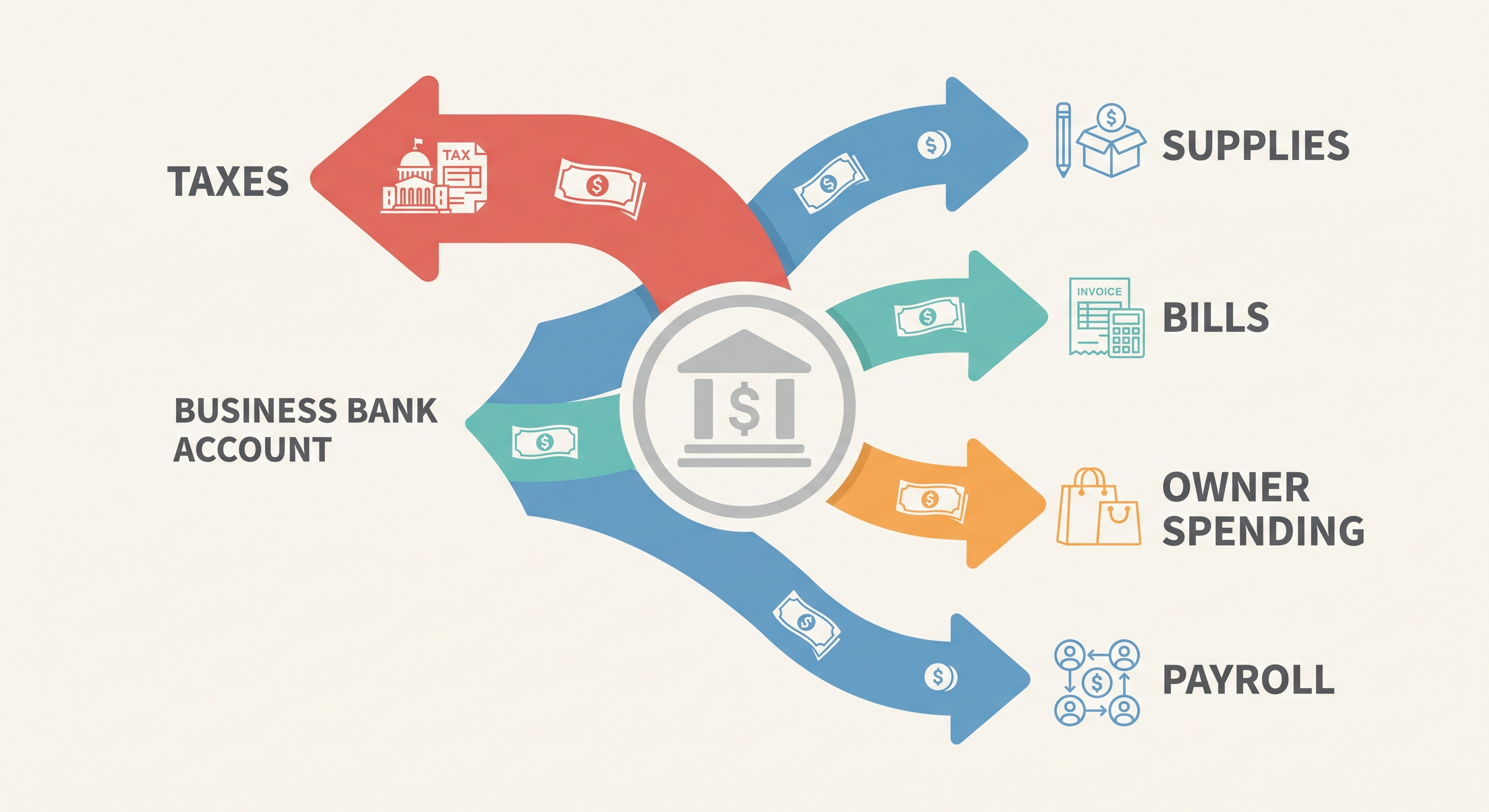
But here's where things can get tricky: not all of the money in your business bank account actually belongs to you.
Some of it may eventually belong to the IRS or your state taxing authority.
The problem is that when your tax money is sitting right alongside the money you use to pay bills, employees, vendors, and yourself, it can be incredibly easy to spend it.
Then tax time arrives and suddenly you're wondering: “Where did all the money go?”
One of the simplest ways to avoid this problem is to establish a separate bank account specifically for your tax savings.
It isn't complicated. It doesn't require a fancy financial system. And it can make managing your business cash flow much easier.
Let's look at why this simple strategy works and how you can put it into practice.
Your Business Bank Balance Isn't the Same as Your Spendable Cash
One of the biggest financial mistakes business owners make is assuming: “If it's in my bank account, I can spend it.”
Not necessarily.
Imagine your business brings in $10,000 this month. It might feel like you have $10,000 available.
But after accounting for operating expenses, owner compensation, and taxes, the amount you can actually spend may be considerably less.
And taxes can be particularly easy to overlook because they're often paid later.
You may earn the income today but not make the corresponding tax payment for weeks or months.
That creates a dangerous gap between:
Money you have today and money you need to set aside for future obligations.
A separate tax account helps close that gap.
Why Keeping Tax Money in Your Operating Account Can Be Risky
When everything is sitting in one account, your bank balance can give you a false sense of security.
You see $20,000 sitting there and think: “Business is doing pretty well!”
But perhaps $5,000 of that needs to be reserved for taxes.
Now you don't actually have $20,000 available to spend.
You have something closer to $15,000 of available cash, depending on your other upcoming obligations.
Without a system for separating that money, it's easy to:
Buy equipment you don't immediately need
Increase discretionary spending
Take a larger owner draw
Commit to new subscriptions or services
Spend more because the account balance looks healthy
None of those decisions necessarily seem unreasonable when you're looking at the full bank balance.
That's why the problem isn't always overspending.
Sometimes it's simply not knowing what portion of your cash already has a job.
A Separate Tax Account Creates a Simple Mental Boundary
This is one of the biggest benefits of having a dedicated account.
When money moves into your tax savings account, you can stop thinking about it as available spending money.
It has a job.
That job is paying your taxes.
For example, you might have:
Operating Account Used for:
Business expenses
Payroll
Owner payments
Regular operating costs
Tax Savings Account Used for:
Federal estimated tax payments
State tax obligations, when applicable
Other tax-related payments
This separation makes your bank balance easier to interpret.
Instead of seeing one large number and trying to mentally calculate how much is actually available, you're creating a system where your accounts provide some of that information for you.
How Does a Business Tax Savings Account Work?
The concept is simple.
Step 1: Estimate how much you need to save
Your tax savings target should be based on your individual tax situation, not a random percentage you found online.
Your tax liability can depend on factors such as:
Business income
Business structure
Other household income
Deductions
Tax credits
Estimated tax payments already made
State and local tax obligations
This is where tax planning can be particularly valuable.
Your accountant or tax professional can help you determine a reasonable amount to set aside.
Step 2: Move the money into the tax account
Once you determine your target, transfer the appropriate amount from your operating account into your dedicated tax savings account.
You can do this based on your cash flow. Monthly, biweekly, or even more frequently may work best for you.
The important thing is consistency.
Step 3: Don't treat the account like extra cash
This is critical.
The tax account isn't your emergency fund.
It isn't your vacation fund.
And it isn't your “I really want this new piece of equipment” fund.
It's tax money.
Leave it alone until it's time to make the applicable tax payment.
You Don't Have to Wait Until Tax Time
One of the biggest advantages of this approach is that you're preparing for taxes before the payment is due.
For example, if you know you have an estimated tax payment coming up, you don't want to be scrambling to find several thousand dollars a few days before the deadline.
Instead, you've gradually accumulated the money throughout the year.
That changes the experience from:
“Oh no, my tax payment is due!” to “The money is already set aside.”
That's a much better place to be.
Make Saving for Taxes Automatic
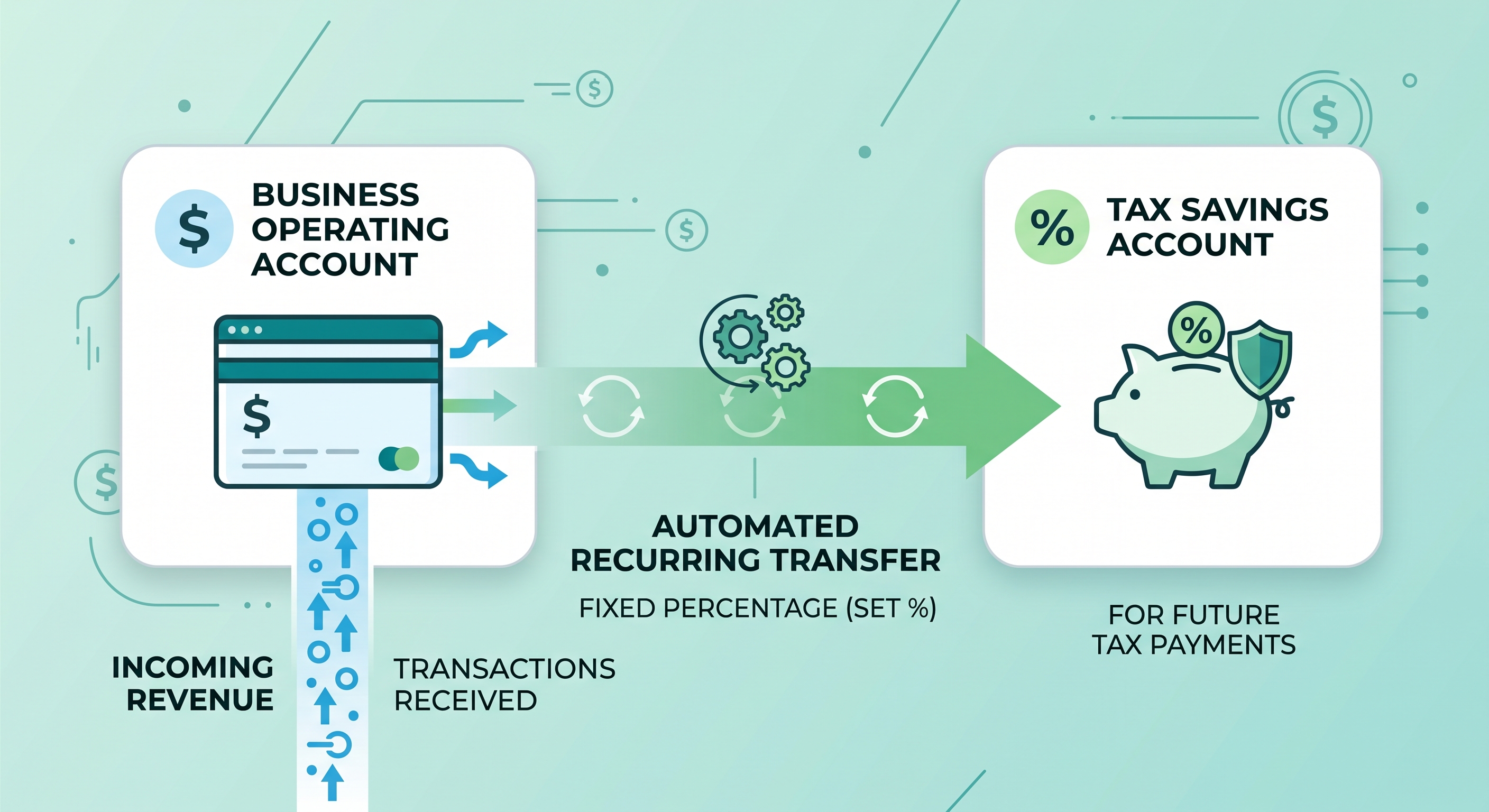
If you struggle with remembering to move money into your tax account, automation can help.
Consider setting up recurring transfers from your operating account into your tax savings account.
You could schedule transfers:
After each payday
Weekly
Biweekly
Monthly
Based on your revenue cycle
For businesses with inconsistent income, a percentage-based approach may make more sense than transferring the same dollar amount every month.
The right system depends on your business and cash flow.
The goal is to make tax savings a routine part of managing your business not something you remember only when a deadline is approaching.
What If You Already Spent Your Tax Money?
If you're reading this and thinking, “This sounds great, but I've already been using my operating account for everything,” don't panic.
You can start now.
First, determine what taxes you expect to owe and when they're due.
Then look at your current cash position and upcoming business obligations.
From there, create a realistic plan for building your tax reserve.
You may not be able to fully fund the account overnight and that's okay.
The important thing is to stop adding to the problem.
Going forward, begin setting aside money as income comes in.
If you're unsure how much you should be saving, this is a great conversation to have with your tax professional.
A Separate Tax Account Is More Than a Banking Trick
At first glance, opening another bank account might seem like a minor administrative task.
But the real benefit is financial clarity.
A separate tax account can help you:
Understand how much cash is actually available
Avoid accidentally spending money needed for taxes
Prepare for estimated tax payments
Reduce last-minute financial stress
Build better cash-management habits
Make more informed business decisions
And perhaps most importantly, it can help you stop viewing your entire bank balance as available profit.
Cash in the bank is not the same thing as profit and profit isn't necessarily the same thing as cash you can spend.
Understanding those differences is an important part of becoming a more financially confident business owner.
Your Simple Tax Savings Setup
If you don't currently have a separate tax account, here's a simple place to start:
1. Open a separate business savings account.
Choose an account that is easy to access when you need to make your tax payments.
2. Determine your tax savings target.
Work with your tax professional to establish an amount based on your actual tax situation.
3. Decide when you'll transfer money.
Choose a schedule that fits how money flows through your business.
4. Automate the transfers when possible.
The fewer decisions you have to make, the easier it is to stay consistent.
5. Review your tax savings regularly.
Your tax situation can change as your business grows, so your savings target may need to change too.
6. Keep your tax account off-limits for everyday spending.
Remember: this money already has a job.

Don't Let a Healthy Bank Balance Fool You
Having money in your business bank account is a good thing.
But a large balance doesn't automatically mean you have money available to spend.
Some of that cash may already be committed to vendors, payroll, upcoming expenses, or taxes.
Creating a separate tax savings account is a simple way to give your tax money a clear destination before it gets mixed in with everything else.
You don't need a complicated financial system to get started.
Sometimes, one extra bank account can make a surprisingly big difference.
Ready to Make Tax Savings Easier?
Take a look at your business bank account today.
Ask yourself: “How much of this money is actually available and how much already has a job?”
If you don't have a dedicated tax savings account, consider opening one and creating a plan for funding it.
And if you're not sure how much you should be setting aside for taxes, that's a conversation worth having with your tax professional.