
Should You Elect S Corp Status? 8 Questions to Ask.
Thinking About an S Corporation? Ask These Questions First
If your small business is growing, you may have heard that electing S corporation status is a smart way to save on taxes. Perhaps another business owner told you how much they saved, or you have seen advice online suggesting that every profitable LLC should make the switch.
But here is the thing: an S corporation election can create tax savings for some business owners, but it is not the right move for everyone.
The decision involves more than comparing tax rates. You need to consider your business profits, reasonable compensation, payroll costs, administrative responsibilities, and even how your personal finances fit into the picture.
For pet care entrepreneurs and other small business owners, making the right decision starts with asking the right questions.
Let's explore what you should consider before electing S corporation status, so you can make an informed decision that supports your business and financial goals.
First, What Does It Mean to Elect S Corporation Status?
An S corporation is a federal tax classification, not a business entity you form in the same way you establish an LLC or corporation.
For example, you can establish an LLC under state law and, if eligible, elect to have it taxed as an S corporation for federal tax purposes. Your LLC can retain its legal identity while its federal tax treatment changes.
By default, a single-member LLC is generally treated as a disregarded entity for federal income tax purposes, while a multi-member LLC is generally treated as a partnership. An eligible LLC can elect S corporation tax treatment by filing the appropriate election with the IRS.
S corporations generally pass income, losses, deductions, and credits through to their shareholders, who report applicable items on their personal tax returns. They also have specific eligibility requirements and ongoing tax and payroll obligations.
The key takeaway? You may not need to change your legal business structure to explore S corporation tax treatment. However, the election can significantly change how you pay yourself and manage your business finances.
1. Is My Business Profitable Enough to Benefit?
This is one of the most important questions to answer before making the switch.
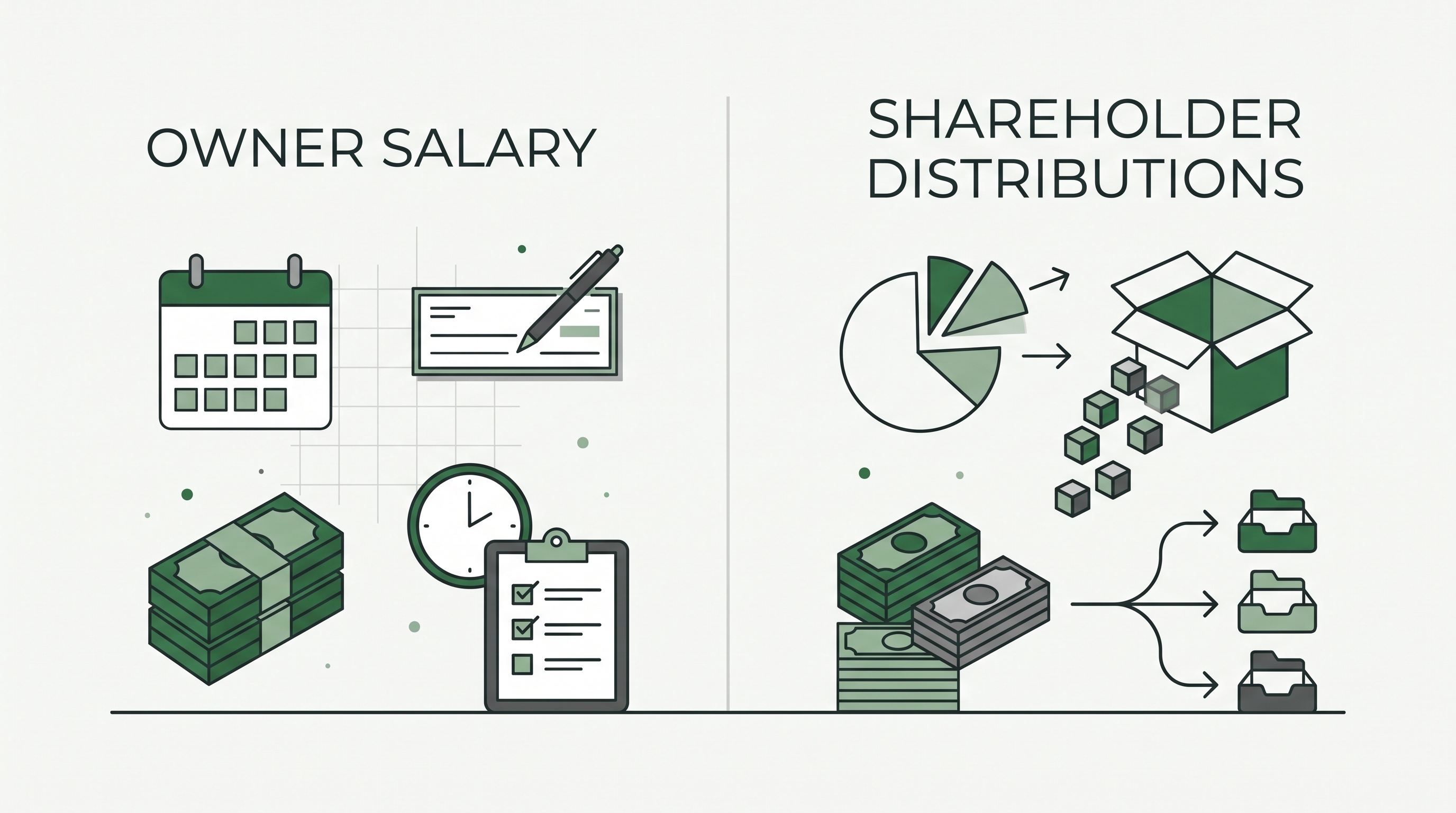
S corporation status is often discussed as a way to reduce self-employment taxes. The potential benefit generally comes from paying an appropriate salary to an owner who works in the business and potentially taking additional profits as distributions.
Unlike a sole proprietor or a partner in a partnership, an S corporation shareholder-employee generally pays Social Security and Medicare taxes on wages rather than on S corporation distributions.
However, that does not mean every dollar you take out of an S corporation is automatically exempt from employment taxes, or that your total tax bill will necessarily decrease.
Your business must generate enough profit for the potential tax savings to outweigh the additional costs of operating an S corporation.
Consider the full financial picture
Before making the election, evaluate:
Annual net profit: How much does your business earn after ordinary operating expenses?
Profit consistency: Are your earnings relatively predictable, or do they fluctuate significantly throughout the year?
Owner compensation: How much would you reasonably need to pay yourself for the work you perform?
Operating costs: What will payroll processing, tax preparation, bookkeeping, and other compliance requirements cost?
Cash flow: Can your business comfortably cover payroll, taxes, operating expenses, and other obligations?
For example, a pet sitter who earns $35,000 in annual business profit may have a very different outcome from a boarding facility owner earning $150,000.
The boarding facility may have more profit available after paying a reasonable salary, potentially creating a greater opportunity for tax savings. The pet sitter's additional payroll and tax preparation costs could consume much of any potential benefit.
These figures are illustrative, not universal income thresholds. Your results will depend on your circumstances.
Don't make the decision based on revenue alone. A business generating $300,000 in sales may have less profit available than one generating $150,000 in sales.
Start with your actual numbers, not an arbitrary profit target you found online.
2. How Much Could I Actually Save After Expenses?
Potential tax savings are important, but the number you need to evaluate is your estimated net benefit.
An S corporation election can introduce expenses that you may not currently have, including:
Payroll software or payroll service fees
Additional bookkeeping and accounting work
Preparation of the S corporation's annual tax return
State-level taxes, fees, or reporting obligations, where applicable
Administrative time spent maintaining compliance
Your tax professional should compare your current tax situation with a projected S corporation scenario, accounting for these additional expenses.
Ask for a side-by-side comparison
Ideally, your analysis should include:
Your estimated taxes under your current business structure.
A reasonable salary estimate under S corporation treatment.
Employer and employee payroll taxes and related payroll expenses.
Estimated S corporation tax preparation and compliance costs.
Your projected overall tax savings after the added costs.
Remember that a salary paid to you is not simply an additional business expense in the same way as a new software subscription. It is compensation you receive, with income tax and payroll tax implications for both you and the business.
The goal is to compare your overall financial position under each scenario.
A projection that focuses only on potential employment tax savings may overstate the benefit.
3. What Is a Reasonable Salary for the Work I Do?
If you work in your S corporation, you generally cannot simply pay yourself a minimal salary and classify everything else as distributions.
The IRS requires an S corporation to pay reasonable compensation to a shareholder-employee for services performed before making non-wage distributions to that shareholder-employee.
Reasonable compensation is not a universal dollar amount or a percentage of profit. It depends on the facts and circumstances of your business and the services you provide.
Factors can include:
Your duties and responsibilities
Your training and experience
The time you spend working in the business
Compensation for comparable work
The role other employees play in generating revenue
The contribution of business assets, equipment, and capital to generating income
Think about what you actually do
Imagine you own a pet grooming business. You spend 30 hours a week grooming clients, managing employees, scheduling appointments, and overseeing operations.
Your compensation analysis should consider both the grooming services you personally provide and your management responsibilities.
Now imagine you own a larger grooming facility where employees perform most of the grooming while you focus on management and business development. The analysis may look different because the sources of business revenue and your personal contribution have changed.
Neither scenario automatically produces a particular salary. The point is that your compensation should be based on defensible facts rather than an arbitrary number chosen to maximize distributions.
Before making the election, ask your tax professional to help you develop and document a reasonable compensation approach.
4. Am I Prepared to Run Payroll?
One of the biggest practical changes for many S corporation owners is how they pay themselves.
As a sole proprietor, you generally take owner draws rather than treating those withdrawals as wages. Under S corporation treatment, an owner who works in the business generally needs to receive reasonable compensation through payroll.
That means you may need to establish a payroll system, withhold applicable taxes, remit payroll taxes, and file the required payroll forms.
Depending on your circumstances, you may also need to address unemployment tax obligations, payroll reporting, and other employment requirements.
Consider the day-to-day responsibilities
Before electing S corporation status, make sure you have a plan for:
Setting up and maintaining payroll.
Establishing a reasonable pay schedule.
Withholding and depositing the appropriate taxes.
Filing payroll tax returns and issuing required wage statements.
Maintaining payroll records.
Coordinating payroll with your bookkeeping and cash flow.
You do not necessarily have to handle these tasks yourself. Payroll providers and accounting professionals can help.
However, outsourcing the work does not eliminate your responsibility to ensure that the business meets its obligations.
If your current bookkeeping is already behind or your business finances are difficult to track, consider addressing those issues before adding another layer of compliance.
5. Can I Keep Up With the Additional Compliance Requirements?
An S corporation election is not a one-time filing followed by years of automatic tax savings.
S corporations generally must file an annual federal income tax return on Form 1120-S and provide Schedule K-1 to shareholders. Payroll and other reporting requirements may also apply.
You will need to maintain accurate financial records, document transactions, and properly distinguish between business expenses, owner compensation, distributions, and other payments.
Your bookkeeping becomes especially important because the business's reported income and deductions affect the tax information passed through to shareholders.
Establish a reliable financial routine
Before making the switch, consider whether you have:
Separate business and personal finances.
Consistent monthly bank and credit card reconciliations.
Accurate income and expense classifications.
A process for recording payroll and owner distributions.
Timely financial reports.
A plan for meeting tax and filing deadlines.
For pet care businesses, this can also mean properly tracking revenue from boarding, grooming, daycare, training, or other service lines.
Clean financial records help you and your tax professional evaluate whether the election makes sense and maintain compliance afterward.
If you need to improve your bookkeeping, that does not automatically disqualify you from electing S corporation status. It simply means you should account for the cleanup work and establish a reliable process before moving forward.

6. How Will the Election Affect My Personal Taxes and Financial Goals?
Your business taxes do not exist in isolation.
S corporation income generally passes through to your personal tax return, and the amount of tax you ultimately owe can depend on factors beyond your business's profits.
Your other income, filing status, dependents, investments, retirement contributions, health insurance arrangements, and other financial circumstances may affect the overall outcome.
For example, a business owner who is also earning wages from another job may have a different tax situation from someone whose business is their only source of income.
Retirement planning may also deserve attention. Your compensation and the type of retirement plan you use can influence contribution calculations and planning opportunities.
Health insurance requires special consideration for certain S corporation shareholders, including specific reporting and deduction rules for shareholders who own more than 2% of the corporation.
These details are easy to overlook when the conversation focuses only on self-employment tax savings.
Before making a decision, ask your tax professional to consider your business and personal financial picture together.
7. Is My Business Eligible, and When Should I Make the Election?
Not every business or owner qualifies for S corporation status.
Among other requirements, an eligible S corporation generally must be a domestic entity, have no more than 100 shareholders, have only allowable shareholders, and have only one class of stock.
Certain corporations are ineligible, and additional rules apply to ownership and tax classification.
If you operate an LLC, your eligibility and filing requirements will depend on your existing tax classification and circumstances.
Pay attention to the filing deadline
Eligible businesses generally make the S corporation election by filing IRS Form 2553.
For an election to take effect at the beginning of a tax year, the general deadline is no later than two months and 15 days after the start of that tax year. An election can also be made during the preceding tax year for the following tax year.
For calendar-year businesses seeking an election effective January 1, the standard deadline is generally March 15, subject to applicable filing rules and exceptions.
Late-election relief may be available in qualifying circumstances, but you should not assume it will apply automatically.
If you are considering an election for the upcoming tax year, start the conversation early enough to review your financial projections, eligibility, payroll setup, and filing requirements.
You can review the official IRS Form 2553 information for the election form and instructions.
8. Does an S Corporation Fit My Long-Term Business Plans?

Finally, consider where your business is headed.
Your current profit level matters, but so do your plans for growth, hiring, expansion, and ownership.
Ask yourself:
Do I expect profits to increase, decrease, or remain relatively stable?
Am I planning to hire employees or expand to another location?
Will I need to bring in a business partner or outside investor?
Could my ownership structure change in the next few years?
Will the added administrative work still make sense as my business grows?
S corporation ownership rules can affect how you structure ownership and bring in investors. For example, S corporations generally cannot have partnerships or corporations as shareholders, and they must meet restrictions on the classes of stock they can have.
If you expect to bring in investors, restructure ownership, or pursue a significant business transaction, discuss those plans before making the election.
Your best tax strategy should support your long-term business goals rather than create unnecessary complications.
Your Pre-Election Checklist
Before deciding whether to elect S corporation status, make sure you can answer these questions:
Do I know my business's actual net profit?
Have I reviewed how consistent my profits are?
Have I estimated a reasonable salary for the work I perform?
Have I compared my current tax situation with a projected S corporation scenario?
Have I included payroll, tax preparation, bookkeeping, and other compliance costs?
Am I prepared to meet payroll and filing obligations?
Have I considered how the election could affect my personal taxes and financial goals?
Have I confirmed my eligibility and the appropriate filing deadline?
Does the election support my long-term business plans?
You do not need to have every answer figured out before speaking with a tax professional. The purpose of this checklist is to identify what you need to evaluate before making a decision.
Conclusion: Make the Decision With Your Numbers, Not Someone Else's
An S corporation election can be a valuable tax planning strategy for the right business. But the best decision depends on more than how much revenue you generate or how much another business owner claims to save.
Your profits, reasonable compensation, additional expenses, compliance responsibilities, personal tax situation, and future plans all deserve consideration.
The goal is not simply to pay less in taxes. It is to make a well-informed decision that supports your profitability, protects your business, and helps you plan for the future.
At C-Squared Accounting, we believe effective tax planning starts with understanding the full financial picture—not chasing a tax strategy because it worked for someone else.
Thinking about electing S corporation status? Start by reviewing your current financials and identifying the questions you need answered. If you are ready to explore your options, visit C-Squared Accounting to learn how tax planning and accounting support can help you make informed decisions for your business.
Have you considered an S corporation election for your business? Share your biggest question in the comments. Your question may help another business owner make a more informed decision, too.
Disclaimer: This article is for educational purposes only and does not constitute individualized tax, legal, or financial advice. Tax rules and filing requirements can change, and eligibility depends on individual circumstances. Consult a qualified tax professional before making an S corporation election.