
Is Your Business Ready for Its Tax Bill?
For many small business owners, taxes are something to think about once a year: gather the documents, hand everything to your CPA, and hope for the best.
But waiting until tax season to look at your tax situation can mean missing opportunities to save money or getting hit with a tax bill you weren’t expecting.
That’s why a mid-year tax check-in can be one of the most valuable financial reviews you do all year.
By looking at your business performance and projected tax liability while there’s still time to make changes, you can make more informed decisions about spending, saving, estimated payments, retirement contributions, and other tax strategies.
Here’s what you should review during your mid-year tax check-in and why it matters.
What Is a Mid-Year Tax Check-In?
A mid-year tax check-in is essentially a financial snapshot of where your business stands halfway through the year.
Instead of asking, “How much did I owe last year?” you’re asking:
“Based on how my business is performing this year, what is my tax situation likely to look like?”
A good check-in should look at:
Year-to-date revenue and expenses
Current and projected business profit
Estimated federal and state tax liability
Estimated tax payments already made
Owner compensation and distributions
Major purchases or planned investments
Retirement contributions
Potential tax deductions and credits
Changes in your personal financial situation
The goal isn't simply to predict your tax bill. It's to give you enough information to do something about it.
Why You Shouldn't Wait Until Tax Season
Tax planning works best when you have time to act.
Once the year is over, many opportunities are gone. You can’t go back and change how you ran your business during the previous 12 months.
A mid-year review gives you time to:
1. Identify potential tax savings
You may discover strategies that could reduce your taxable income or improve your overall tax position.
Depending on your circumstances, that might include:
Purchasing needed business equipment
Making eligible retirement contributions
Reviewing vehicle and home office deductions
Evaluating your entity structure
Timing income and expenses strategically
The important part is knowing about these opportunities before the year ends.
2. Avoid an unexpected tax bill
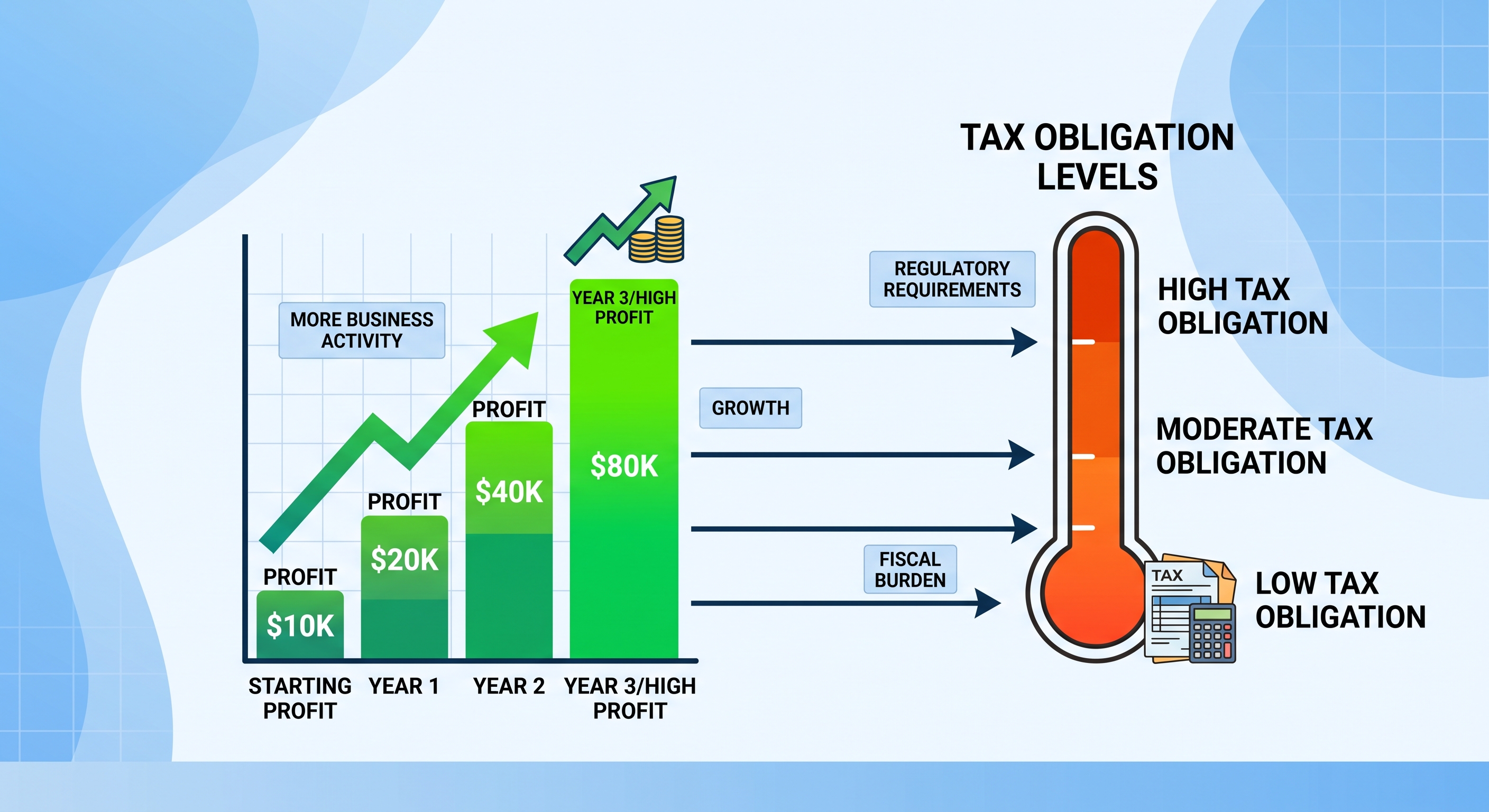
One of the biggest surprises for business owners is realizing they earned significantly more money than expected and therefore owe significantly more in taxes.
If your business has grown, your tax payments may need to grow with it.
For example, suppose your business earned $100,000 in profit last year but is on pace for $175,000 this year. If you're still making estimated payments based on last year's numbers, you could find yourself significantly underpaid.
A mid-year projection can help you determine whether your estimated payments need to change.
3. Make better business decisions
Taxes shouldn't be considered separately from the rest of your business finances.
If you're considering hiring an employee, purchasing a vehicle, investing in equipment, increasing your retirement contributions, or taking money out of the business, the tax implications should be part of the conversation.
Your financial statements can tell you what happened.
Tax planning can help you understand what those numbers mean for your next decision.
Your Bookkeeping Is the Starting Point
Here's something many business owners overlook:
Good tax planning requires good financial information.
If your books aren't current or your income and expenses aren't categorized correctly, it's difficult to accurately estimate your tax liability.
That's why a mid-year tax check-in should start with your bookkeeping.
Before reviewing your tax situation, make sure you've reconciled your accounts and reviewed your:
Profit and loss statement
Balance sheet
Business bank accounts
Credit card accounts
Major income sources
Large or unusual expenses
Your tax professional can only plan with the information available.
If your books are inaccurate, your tax projection may be inaccurate too.
What to Review During Your Mid-Year Tax Check-In
Here's a simple framework you can use.
Step 1: Review Your Year-to-Date Profit
Start by looking at your current year-to-date revenue and expenses.
Then compare them to:
The same period last year
Your current-year budget
Don't just look at revenue.
Profit is the number that matters most for tax planning.
If your revenue is up but your expenses have increased significantly, your tax situation may not have changed as much as you think.
On the other hand, if revenue has increased while expenses have stayed relatively flat, your taxable income could be substantially higher.
Step 2: Project Your Full-Year Income
Your year-to-date numbers are only part of the picture.
Think about what you expect for the rest of the year.
Ask:
Are sales increasing or slowing down?
Do you expect a busy season?
Are you planning a major purchase?
Are you adding employees?
Have your margins changed?
Have you added a new revenue stream?
Using these answers, you can create a reasonable estimate of your full-year business profit.
That projection becomes the foundation for your tax planning.
Step 3: Review Your Estimated Tax Payments
Next, compare your projected tax liability to the payments you've already made.
If your business is performing better than expected, you may need to increase your estimated payments.
If your income is lower than expected, your tax professional may determine that your payments should be adjusted.
Either way, it's much better to discover this in July or August than when your tax return is due.
Step 4: Look for Planning Opportunities
Once you have a clearer picture of your projected tax liability, ask:
“What can I still do this year?”
This is where working with a tax professional can add significant value.
Depending on your situation, your planning conversation might include:
Retirement planning
Equipment purchases
Vehicle purchases
Home office deductions
Accountable plans
Owner compensation
Business entity considerations
Hiring decisions
Timing of income and expenses
Charitable giving
Tax credits
Not every strategy makes sense for every business. The goal is to identify the strategies that fit your business, your goals, and your financial situation.

Don't Forget About Your Personal Taxes
Your business doesn't exist in a vacuum.
For many small business owners, business income flows directly onto their personal tax return. That means changes in your business can affect your personal tax liability.
During your mid-year check-in, consider whether anything has changed personally, such as:
Marriage or divorce
A new child or dependent
A spouse starting or leaving a job
Significant investment income
A home purchase or sale
Retirement contributions
Other sources of income
Your business tax projection should be considered alongside your overall personal tax picture.
A Mid-Year Check-In Is More Than a Tax Review
It's easy to think of tax planning as simply finding deductions.
But effective tax planning is about more than reducing this year's tax bill.
A good tax check-in should help you answer four important questions:
1. How much tax am I likely to owe?
Understanding your projected liability helps you prepare for the cash requirement.
2. What can I do to reduce my tax burden?
You can identify legitimate strategies while there's still time to implement them.
3. How will taxes affect my business decisions?
You can consider the tax impact before making major purchases, hiring decisions, or other investments.
4. What should I be doing with the money I'm keeping?
Reducing taxes is only one part of the equation. The bigger goal is to use your business profits intentionally whether that means reinvesting in the business, building cash reserves, funding retirement, or pursuing other financial goals.
Your Mid-Year Tax Check-In Doesn't Have to Be Complicated
You don't need a 50-page tax planning report to get value from a mid-year review.
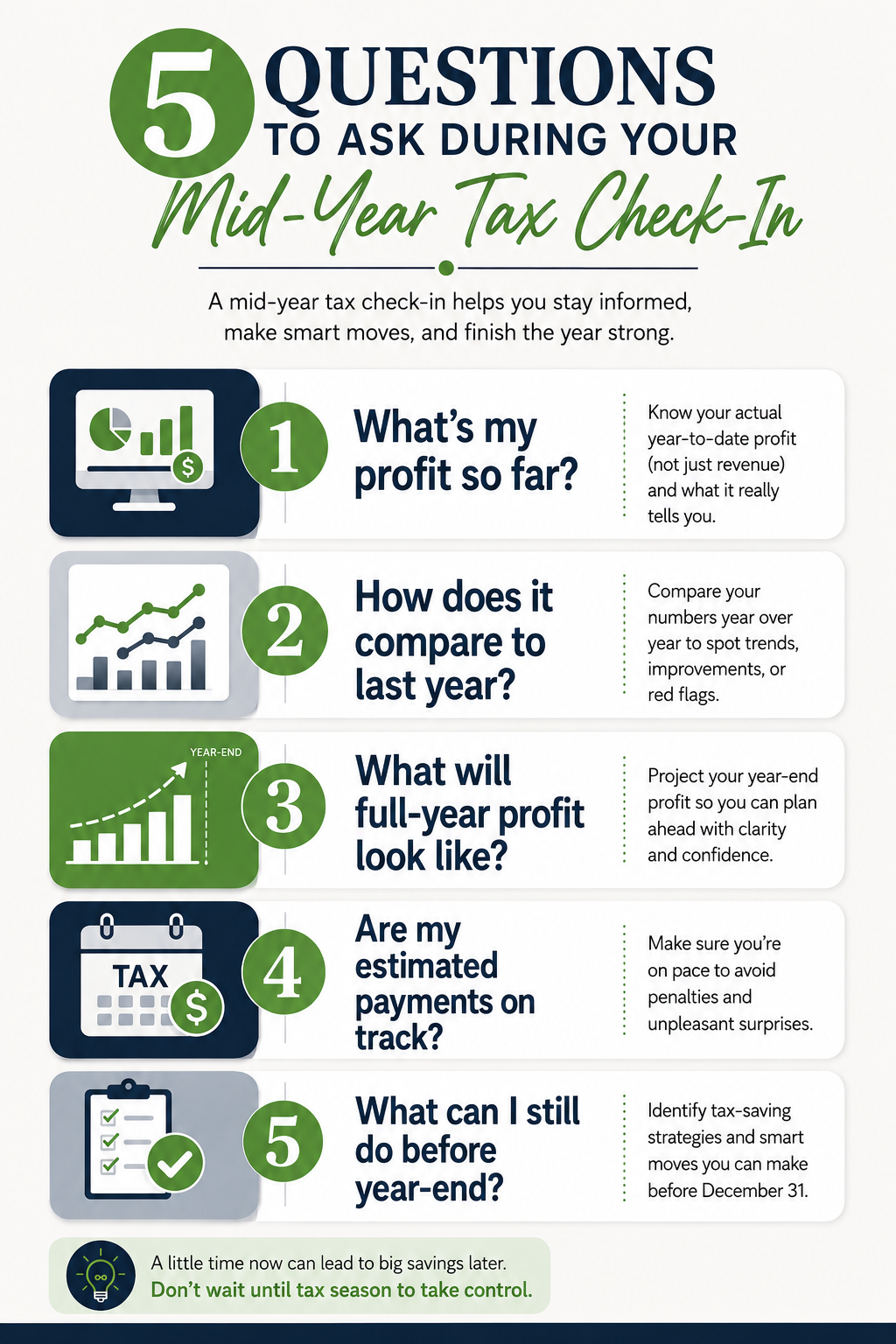
Start with these five questions:
How much profit have I generated so far this year?
How does that compare to last year?
What do I expect my full-year profit to be?
Am I on track with my estimated tax payments?
What tax planning opportunities should I consider before year-end?
If you can't confidently answer those questions, that's a sign it's time to schedule a conversation with your tax professional.
Conclusion
Tax season is the time to report what happened.
Mid-year is the time to plan what happens next.
Taking a few hours to review your numbers, project your income, evaluate your estimated payments, and identify potential tax strategies can help you avoid surprises and make better financial decisions for the rest of the year.
And remember: you can't plan around numbers you don't know. Keeping your books current throughout the year gives you the financial information you need to make tax planning proactive instead of reactive.
Ready to Check In?
Don't wait until tax season to find out where you stand.
Pull your latest financial statements, review your year-to-date profit, and schedule a mid-year tax check-in with your tax preparer. Even if everything looks good, you'll have something valuable: confidence in where you're headed.
What's one number from your business you'd like to understand better before the end of the year? Share it in the comments or send this post to another business owner who needs a mid-year tax check-in.